 Untilfree
Debt-Free Date Calculator: When Is Your Last Payment?
A debt-free date turns a balance into a finish line. It is also the first milestone on a longer road: the day your savings could pay your bills.
How the date is worked out
Each month, interest is added to the balance (the yearly rate divided by 12), then your payment is taken off. The calculator repeats that until the balance reaches zero, and counts the months. It assumes a fixed rate and the same payment every month.
The payment has to be bigger than the monthly interest, or the balance never falls. $15,000 at 18% builds $225 of interest in the first month, so a $225 payment would only stand still.
A worked example
- $15,000 at 18%, paying $400 a month: about 56 months (4 years 8 months), with about $7,200 of interest.
- The same debt at $500 a month: about 41 months, more than a year sooner.
The extra $100 a month does more than its size suggests, because every extra dollar goes straight to the balance, and a lower balance builds less interest.
What happens after the last payment
The month a debt ends, its payment is free. That is the moment that matters for financial independence: the same $400 a month, invested instead of paid out, starts working for you. Many people find their freedom date moves years closer once the payment is redirected.
- Keep the habit: move the old payment to investing the same month.
- Several debts? Compare snowball vs avalanche.
- Cards first: high rates make credit card balances the usual first target.
Tom owes $15,000 at 18% and pays $400 a month. His debt-free month is about four years and eight months away. He finds another $100 a month and brings it forward by more than a year. Then he sets up the $500 to go into an index fund the month after the last payment.
Questions people ask
How do I calculate my debt-free date?
Add a month of interest to the balance (yearly rate ÷ 12), take off your payment and repeat until it reaches zero. The calculator above does it for one debt with a fixed rate.
How long will it take to pay off $15,000?
At 18% interest and $400 a month, about 56 months. At $500 a month, about 41 months.
Why does a small extra payment help so much?
Every extra dollar lowers the balance, so the next month builds less interest. Over years that adds up to months saved.
Is Untilfree a debt payoff app?
No. Untilfree counts down to the day your savings could pay your bills. You can start with savings below zero and see how the date moves once a debt is gone.
Should I invest or pay off debt first?
It depends on the rate. Many people clear high-interest debt such as credit cards first, because few investments reliably beat a 20% interest rate. This is general information, not advice.
After the last payment, the countdown starts
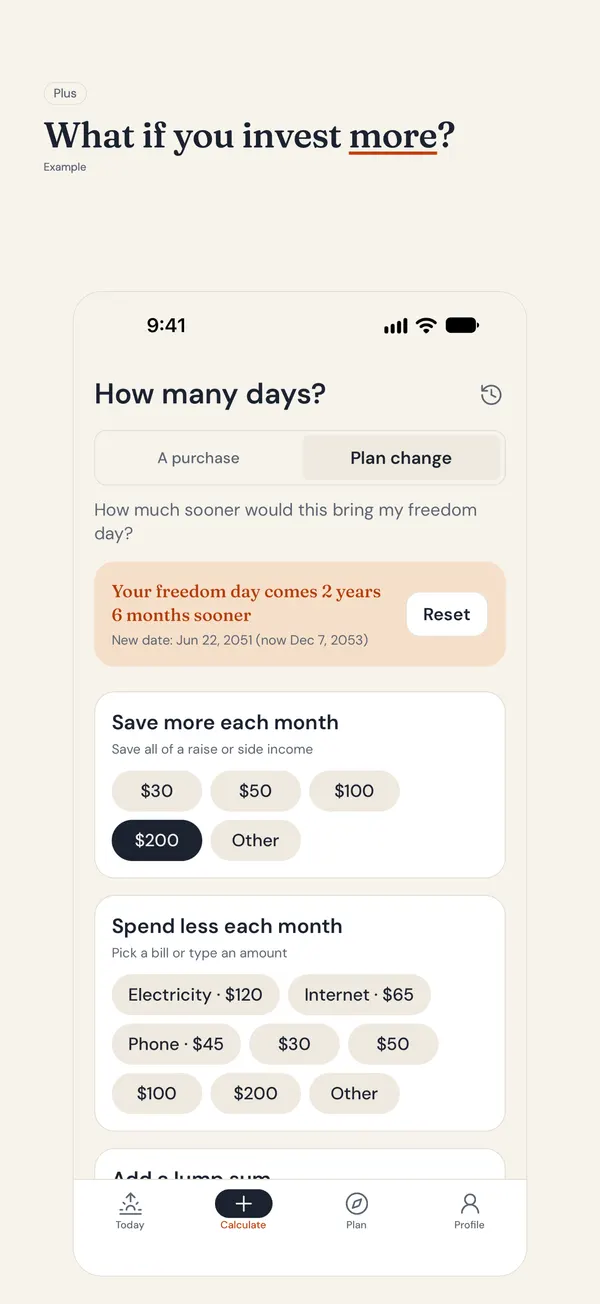
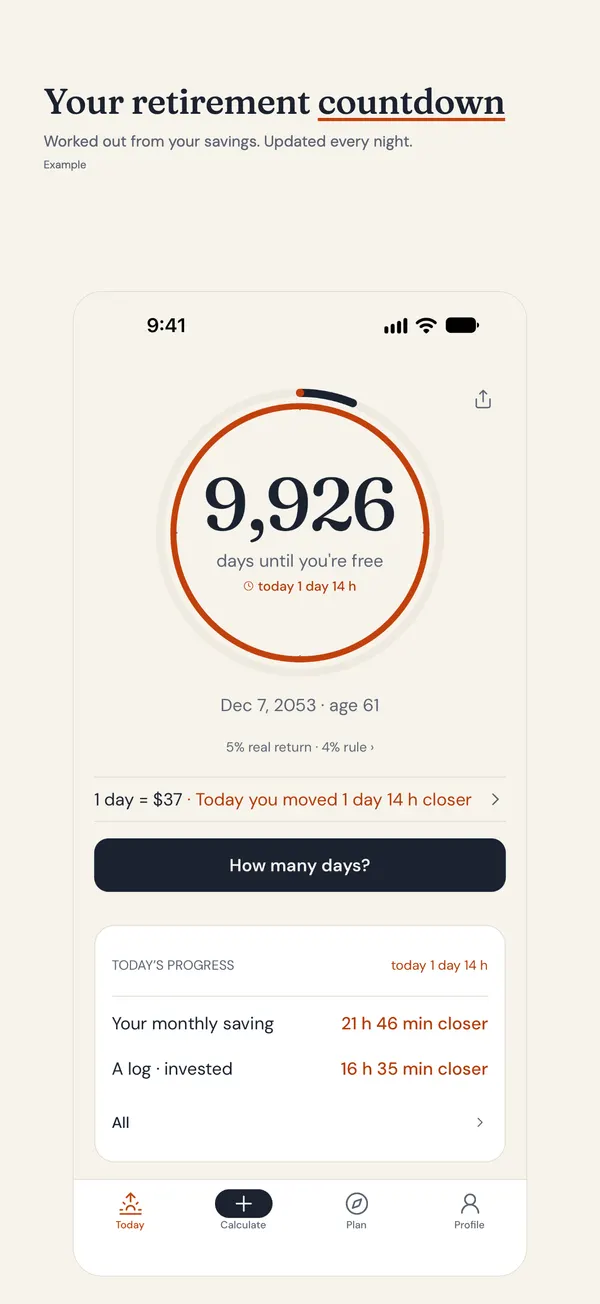
Untilfree does not track debts. It answers the next question: when could you stop working? Enter your savings minus what you owe, and what you can invest each month. When a debt is gone, use What if to add the old payment to your investing and see how much sooner your freedom day comes.
- Savings can start below zero
- What if shows the date with the old payment invested
- No account, no bank link
App Store · Free · Ads, optional Plus · No account · No bank link
Untilfree gives estimates in today’s money (after inflation). Taxes and state pensions are not included. This page is general information, not investment advice.
Published · by Srofia