 Untilfree
How Much Money Do You Need to Quit Your Job?
There are two different answers. One is a cushion that buys months between jobs. The other is a number that means you never need a job again. Most people mean the first.
Decide which question you are asking
A cushion is cash that pays your bills for a set number of months while you rest, retrain, travel or look for something better. A freedom number is the size of invested savings that could pay you for life. The first is a few thousand dollars to a few tens of thousands. The second is far larger and is covered in how much money to never work again.
Sizing a cushion
Start from what you actually spend each month, not what you earn. A rough guide many people use:
- 3 to 6 months if you have in-demand skills and plan to jump to another job.
- 6 to 9 months for a career change or a gap between roles.
- 12 months or more for a business or a long break, since income may take time to show up.
Lena spends $3,000 a month. A 9-month cushion is about $27,000; 6 months is about $18,000; a full year is about $36,000. She also adds health cover, because losing an employer plan can be a surprise bill.
How much to save before quitting to start a business
A business tends to earn nothing at first. Many people plan for 12 months of personal living costs, plus the money the business itself needs. Many people keep the two pots separate, so a bad month for the business does not eat the rent. If you can, test the idea on weekends and build some income before you leave.
When can I quit my job?
A calm checklist beats a gut feeling:
- Your cushion covers the months you chose, in a plain savings account.
- You know your monthly spending, and you have trimmed what you can.
- You have a plan for health cover.
- You have a next step: a search plan, a first client or a course.
- Your debts are small or paid, especially anything with a high rate.
"F-you money"
The phrase, popularized by author JL Collins, means having enough saved that you can walk away from a bad job, a bad boss or a bad deal. It is not about quitting dramatically. It is about having a choice. Even a modest cushion changes how you negotiate and what you tolerate at work.
From cushion to freedom
Quitting for good is a bigger plan, and it is a different number. Looking at your time in hours can help you judge what a job costs you: see your true hourly wage. If you want the longer route, read the early retirement guide, and for the first big step see how long to save $100K.
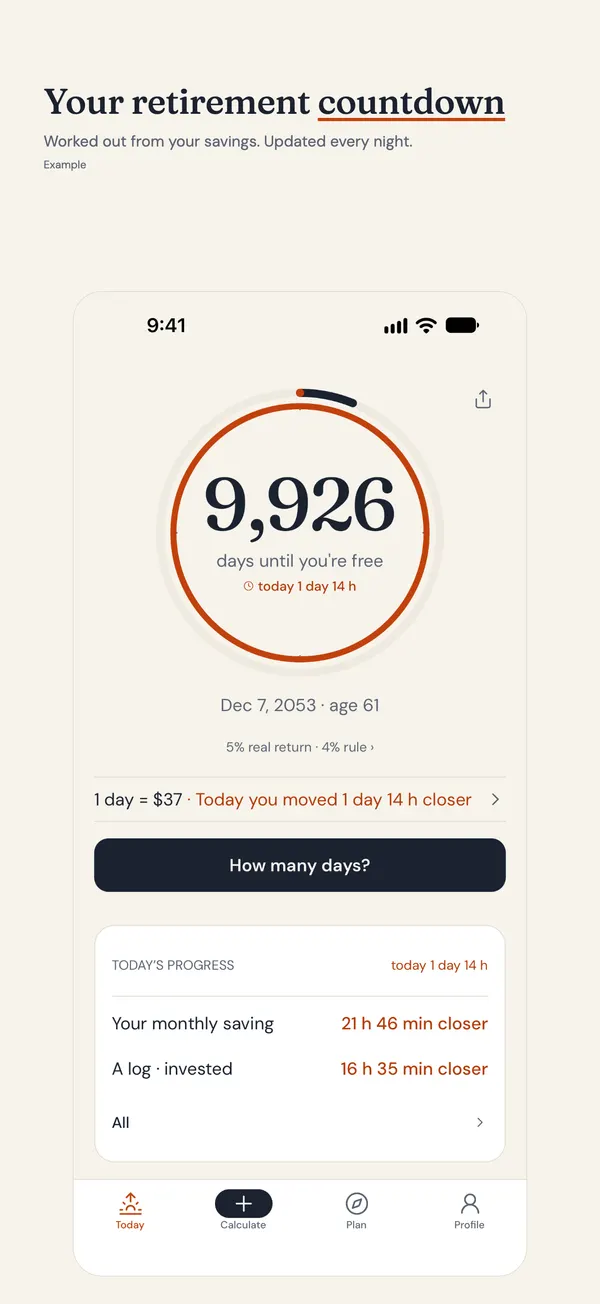
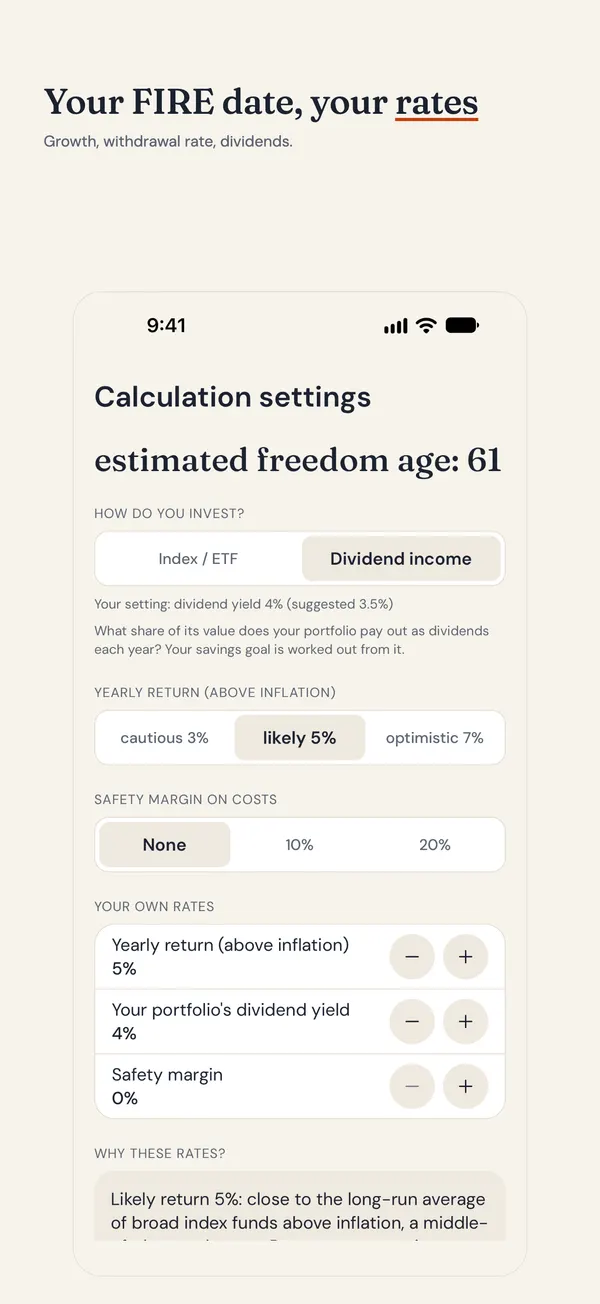
Untilfree does not plan a cushion. It counts down to the day your savings could pay your bills without a job. Each time you mark a buy as "Skipped" or "Added to savings", the date moves a little closer.
Questions people ask
How much money should I save before quitting my job?
Enough to cover your real monthly spending for the months you need, plus health cover. Three to six months suits a quick job switch; nine to twelve suits a career change or a business.
How much money do I need to quit my job for a year?
Your monthly spending times twelve, plus a small buffer. At $3,000 a month that is about $36,000. Add health cover and any one-off costs you can already see coming.
How much money do I need to quit my job and start a business?
Plan for a year or more of personal costs, and keep it apart from what the business needs. A new business often earns little at first, so a longer cushion lowers the pressure.
What is f-you money?
It is savings large enough that you can leave a bad job or situation without panic. It is about having options, not about quitting. The size depends on what you spend and how you feel about risk.
Is a six-month cushion enough?
For a quick move between similar jobs, often yes. For a career change or a slow job market, many people prefer nine to twelve months. Your skills and savings habits shape the answer.
Count down to never needing a job
A cushion buys months. Untilfree works on the longer goal: the day your savings could cover your bills for good.
- Exact freedom day with a nightly countdown
- Bills view shows which of your bills your savings already cover
- "Skipped" and "Added to savings" move the date
App Store · Free · Ads, optional Plus · No account · No bank link
Untilfree gives estimates in today’s money (after inflation). Taxes and state pensions are not included. This page is general information, not investment advice.
Published · by Srofia