 Untilfree
Retiring Early in the UK: ISAs, Pensions and the Gap
The idea of FIRE is the same in the UK, but the tools are different. Most UK plans are built from two pots, an ISA and a pension, and the trick is when each one can be opened.
Two pots, two jobs
- Stocks and shares ISA. You can put in up to £20,000 a year (2026/27). Growth and withdrawals are tax-free, and you can take money out at any age. This is what usually pays for the early years.
- Pension (workplace or SIPP, a self-invested personal pension). Contributions get tax relief, and workplace pensions often come with employer money. But you cannot normally touch it until the minimum pension age.
The usual UK early-retirement plan, often called the "ISA bridge", is to live on the ISA from the day you stop until the pension opens, then let the pension carry the load.
The pension age is moving to 57
The normal minimum pension age rises from 55 to 57 on 6 April 2028. For anyone planning to stop in their early 50s, that is two more years the ISA has to cover. When you do take pension money, up to 25% can usually be taken tax-free, within a lump sum allowance of £268,275; the rest is taxed as income.
Lifetime ISA
A Lifetime ISA can be opened between 18 and 39. You can pay in up to £4,000 a year (part of the £20,000 limit) until 50, and the government adds 25%. Money can come out without a charge for a first home or from age 60; other withdrawals carry a 25% charge, which takes back more than the bonus. Because of the age-60 rule, it fits the later years of a plan better than the bridge years.
The State Pension
The full new State Pension is £241.30 a week (2026/27), around £12,500 a year, and needs 35 qualifying years of National Insurance. The State Pension age is 66 and is rising to 67 between 2026 and 2028; current law then raises it to 68 between 2044 and 2046, so younger savers face a longer gap. Many UK FIRE plans treat it as a later top-up rather than part of the early maths, and some people pay voluntary contributions to fill gaps in their record.
Cash ISA limit from April 2027
From April 2027, under-65s can put at most £12,000 a year into a cash ISA. The overall £20,000 allowance stays, so the change mainly matters for savers who hold a lot of cash rather than investments.
Hannah is 50 and spends £2,500 a month. At 4% her number is about £750,000. If she wants to stop at 52, her ISA has to cover at least five years until her pension opens at 57, and her pension then covers the gap to the State Pension at 67. Untilfree gives her one date for the total; how she splits it between pots is a separate decision.
The 4% figure comes from US data, and some UK analysts prefer a slightly lower rate; see the 4% rule explained.
Questions people ask
How much do I need to retire early in the UK?
A common starting point is 25 times your yearly spending. Spending £30,000 a year points to about £750,000. Many plans split it so the ISA covers the years before the pension opens.
When can I access my pension in the UK?
Usually from 55, rising to 57 from 6 April 2028. Some older schemes have protected lower ages; your provider can tell you.
What is the ISA bridge?
Using ISA savings, which you can take at any age, to cover your spending between stopping work and your pension becoming available.
Is a Lifetime ISA good for early retirement?
It gets a 25% bonus, but money is locked until 60 unless it is for a first home, so it suits the later part of a plan rather than the early years.
Does Untilfree include the State Pension or tax?
No. Untilfree counts your savings only, before tax, in today's money, and leaves out the State Pension. You can set the currency to pounds; amounts are not converted.
One date for your whole plan
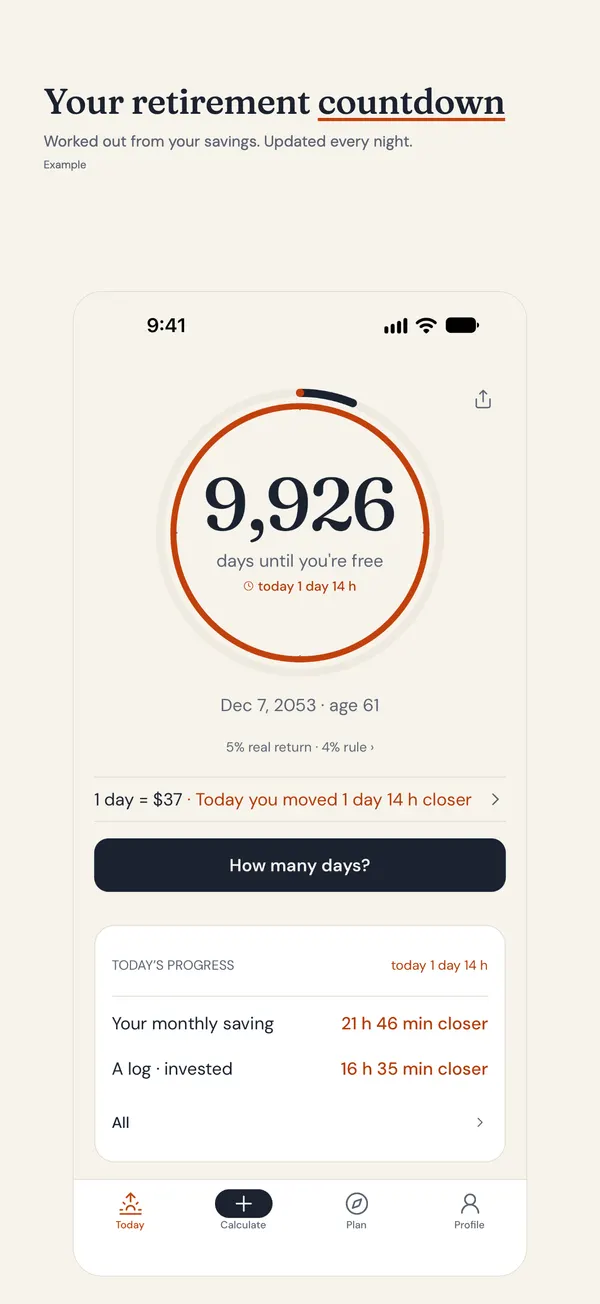
Enter your total savings, monthly investing and spending in pounds. Untilfree shows the date your savings could cover your bills and counts down to it.
- Amounts shown in pounds (£)
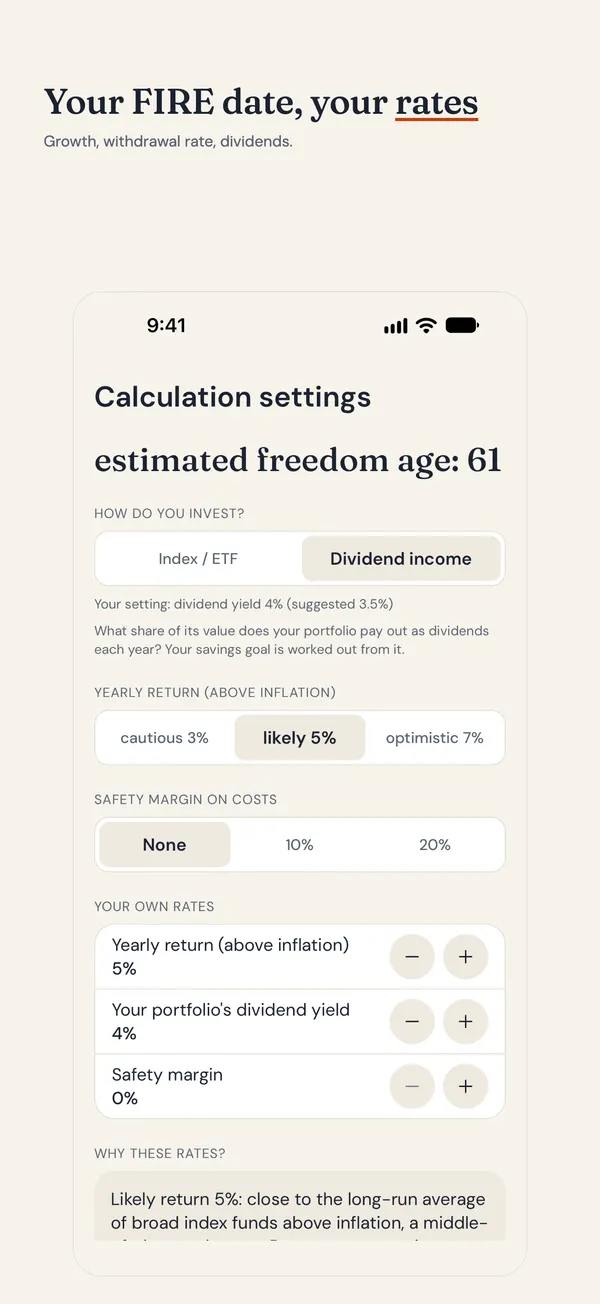
- Withdrawal rate or dividend yield, free to change
- No account and no bank link
App Store · Free · Ads, optional Plus · No account · No bank link
Untilfree gives estimates in today’s money (after inflation). Taxes and state pensions are not included. This page is general information, not investment advice.
Published · by Srofia