 Untilfree
Lean, Chubby, Fat, Barista or Coast FIRE: Which Fits You?
The five FIRE labels sound like five different plans, but they are mostly five answers to one question: how much will you spend, and do you still plan to earn? Here is who each one suits.
One question sits under all of them
Every FIRE type starts from yearly spending. A smaller lifestyle means a smaller pot and an earlier date. A bigger lifestyle means a bigger pot and more years of saving. The labels just give those choices names. None has an official definition, and the rough US bands people use (under about $40,000 a year, $40,000–$80,000, $80,000–$120,000, over $120,000) shift with city and household.
Lean FIRE
You live on a small budget and reach independence sooner. It suits people who already enjoy a simple life, or who prize time over things. The trade-off is little slack: a big medical bill or a rent jump bites harder. See the Lean FIRE number guide.
Chubby FIRE
This is the middle path: comfortable spending without a huge pot. It suits people who do not want to feel restricted but do not want to work into their late fifties either. The trade-off is a longer wait than Lean. More in the Chubby FIRE guide.
Fat FIRE
You keep a generous lifestyle: travel, a larger home, room for surprises. It suits high earners or people willing to work longer. The trade-off is time, and a big pot can feel like a moving target if your tastes grow with your income. See Fat FIRE.
Barista FIRE
You stop the demanding career but keep a lighter job, so your savings only cover part of the spending. It suits people who like working, just not that job. The big trade-off is health insurance and the pay you depend on, which can disappear. Details in Barista FIRE.
Coast FIRE
You have saved enough early that growth alone could take you to a normal retirement age, so you stop adding. It suits people who want a lower-pressure job now. The trade-off is that it relies on returns you cannot be sure of, and you still earn for today's bills. See Coast FIRE.
Reading the comparisons
Lean FIRE versus Coast FIRE is not either-or: Lean describes a lifestyle, while Coast describes a checkpoint on the way. Coast FIRE versus Barista FIRE differ on timing: Coast is about later, Barista is about leaving full-time work now. Chubby versus Fat is mostly a spending line. People also move between them, and it is normal to change your mind as life changes.
Priya has $120,000 saved, invests $2,000 a month and spends $3,500. At 5% growth after inflation and the 4% rule, her full number is $1.05 million and she gets there in about 19 years. A leaner plan at three quarters of her spending reaches its smaller target in about 15 years. She can pick the label later; the real choice is how much she wants to spend.
How to choose
- Spending you would be happy with for years is a better anchor than one that sounds impressive.
- Testing a cautious version and an optimistic one shows how fragile the plan is.
- Remember that Untilfree counts down to full freedom, meaning your savings could pay all your bills. It does not calculate Coast or Barista FIRE, and it doesn't ask you to choose a label.
Questions people ask
What is the difference between Lean FIRE and Fat FIRE?
Lean FIRE assumes a small yearly budget, so you need less money and get there sooner. Fat FIRE assumes a generous budget, so you need a much bigger pot and usually more years of saving.
Is Lean FIRE the same as Coast FIRE?
No. Lean FIRE is a lifestyle: living on little once you stop. Coast FIRE is a checkpoint: your savings can grow to a retirement pot without more contributions. You can aim for both.
Is Coast FIRE or Barista FIRE easier?
Neither is simply easier. Coast needs a large early balance and good growth. Barista needs a job you can rely on and a plan for health insurance. Your situation decides.
Where does Chubby FIRE end and Fat FIRE begin?
There is no official line. Many people put Chubby at roughly $80,000–$120,000 of yearly spending and Fat above that, but it varies by city, family size and who you ask.
Is FIRE the same as FatFIRE?
No. FIRE is the general goal of financial independence. FatFIRE is one style of it, with high spending and a large pot. Other styles aim much lower.
Skip the label, get the date
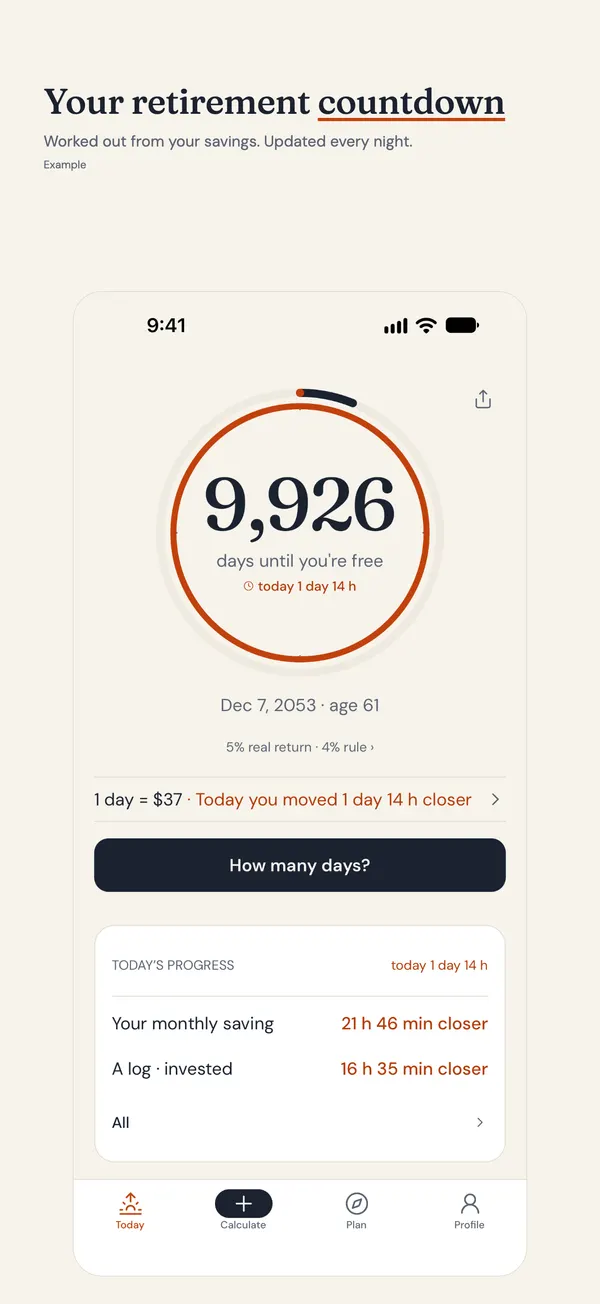
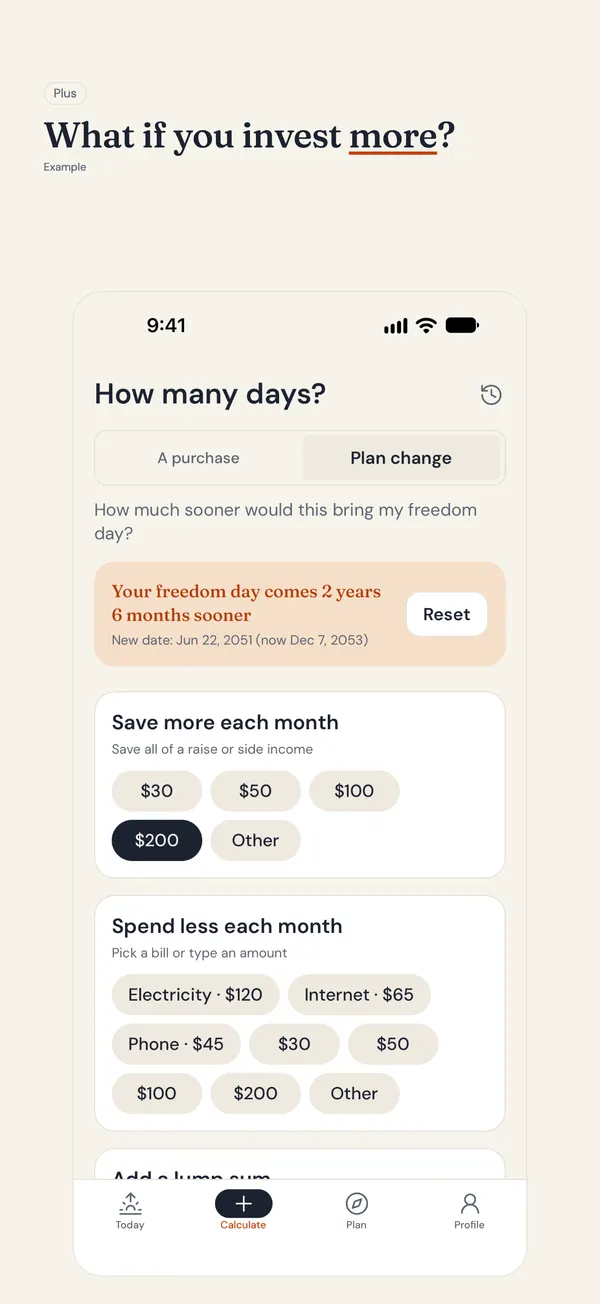
Four questions — your age, savings, monthly investing and monthly spending — and Untilfree gives you a date. Untilfree counts down to the day your savings could cover all your spending.
- Your exact freedom day and the days left
- Test cuts and raises in What if (3 a day free after the first 3 days)
- No account and no bank link
App Store · Free · Ads, optional Plus · No account · No bank link
Untilfree gives estimates in today’s money (after inflation). Taxes and state pensions are not included. This page is general information, not investment advice.
Published · by Srofia