 Untilfree
Fat FIRE: How Big Is the Number and How Long Does It Take?
Fat FIRE means financial independence on a generous budget. You keep the lifestyle you like, and the price is a much bigger pot and usually more years of saving.
Fat FIRE meaning
Fat FIRE is the comfortable end of the spectrum: travel, a nicer home, dining out, gifts and room for surprises. There is no official definition. In the US, many people mean spending above roughly $120,000 a year, but that is a loose guide and depends on where you live and how many people you support.
What a fat number looks like
With the common 4% rule, $10,000 a month ($120,000 a year) points to about $3 million. At $8,500 a month the figure is about $2.5 million, and at $15,000 a month about $4.5 million. People often search for a "Fat FIRE net worth"; the honest answer is that it is simply your yearly spending times about 25, and it depends on whether your net worth counts your home. Most FIRE plans count only invested assets that can pay you an income, not the house you live in.
Dana has $600,000 invested, adds $6,000 a month and spends $10,000. At 5% growth after inflation, Dana's date is about 16 years away. If Dana trims spending to $8,500, the date lands near 14 years. If it rises to $12,000, it moves to about 19. A few thousand dollars of lifestyle changes the calendar by years.
The risks of a big number
- A moving target. Spending tends to rise with income. If your wants grow as fast as your savings, the finish line keeps running away.
- Concentrated pay. Fat FIRE often relies on high earnings from one employer or industry. A layoff or a slow year can set the plan back.
- Taxes on big balances. Large withdrawals can be taxed more heavily, and rules differ by country. A simple estimate leaves taxes out, so a qualified tax professional can help.
- A long retirement. Stopping in your forties can mean funding 45 years or more. Some people use a lower rate for that, which pushes a $10,000 budget toward $3.4 million or higher.
Ways people make Fat FIRE more reachable
- Many people work out which luxuries really matter to them and let the rest go.
- Some plan for years with higher and lower spending, such as big trips early.
- A safety margin can help, because a larger lifestyle has more costs that can go wrong.
- Consider a middle option. Chubby FIRE keeps comfort at a smaller scale, and comparing the types can show where the line feels right.
Fat FIRE and everyday decisions
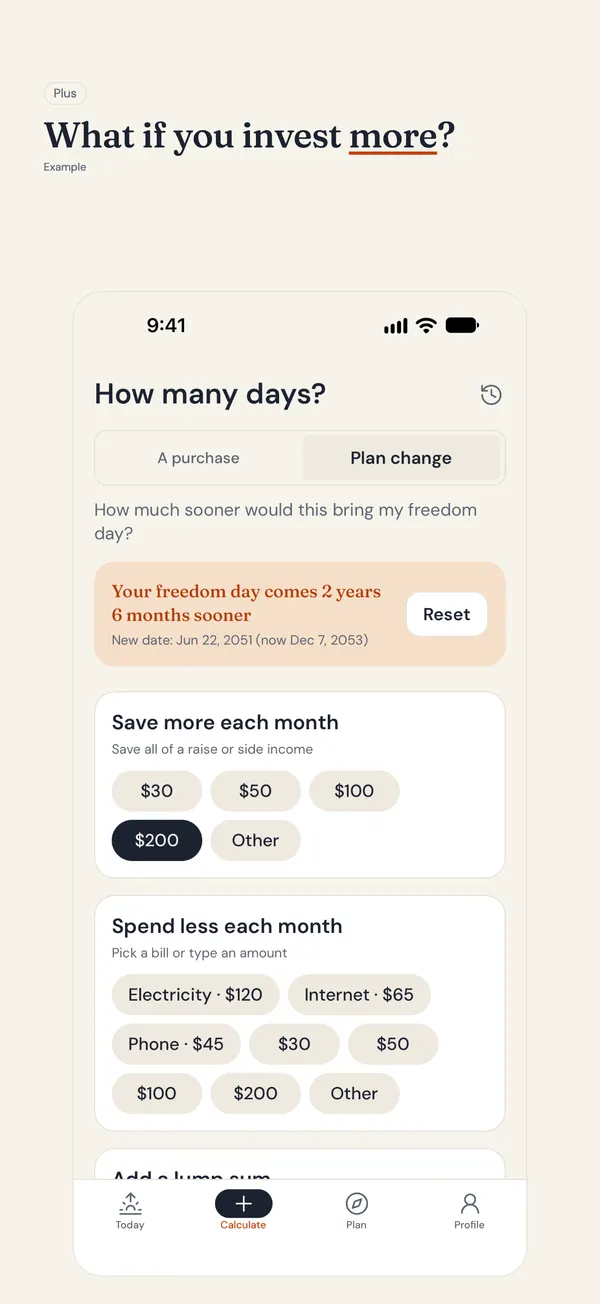
With a number this big, it is easy to feel that one purchase does not matter. Over time it does. A $500 monthly habit adds $150,000 to a Fat target at the 4% rule, which at Dana's pace costs more than a year. That is why a date is useful: the cost shows up in days you can feel. The What if tool in Untilfree lets you try a change, such as investing more or spending less, and watch the date move. It is unlimited for the first 3 days, then 3 a day free, and unlimited with Plus.
If you are still deciding how big a lifestyle you want, start from the FIRE movement overview, and check how long a given amount lasts with how long $1 million lasts.
Questions people ask
What is a Fat FIRE net worth?
There is no fixed figure. A common rule is about 25 times yearly spending, so $120,000 a year points to roughly $3 million of invested assets. Many people exclude their home from the count.
How much do I need for Fat FIRE?
It depends on spending. At $10,000 a month, about $3 million with the 4% rule, or more if you want a cautious rate for a very long retirement.
What does Fat FIRE mean compared with regular FIRE?
Fat FIRE keeps a high-spending lifestyle, so the pot is large. Regular FIRE assumes more modest spending. The labels are informal and the lines between them are blurry.
Is Fat FIRE realistic on a normal salary?
Usually it takes a high income, a long time, or both. Many people reach for Chubby FIRE or work a few extra years instead. Run your own numbers before deciding.
Does Fat FIRE need a lower withdrawal rate?
Not always, but many people choose one if they retire very early, since the money must last longer. A lower rate means a bigger pot, which adds even more to an already big number.
Turn the big number into a date
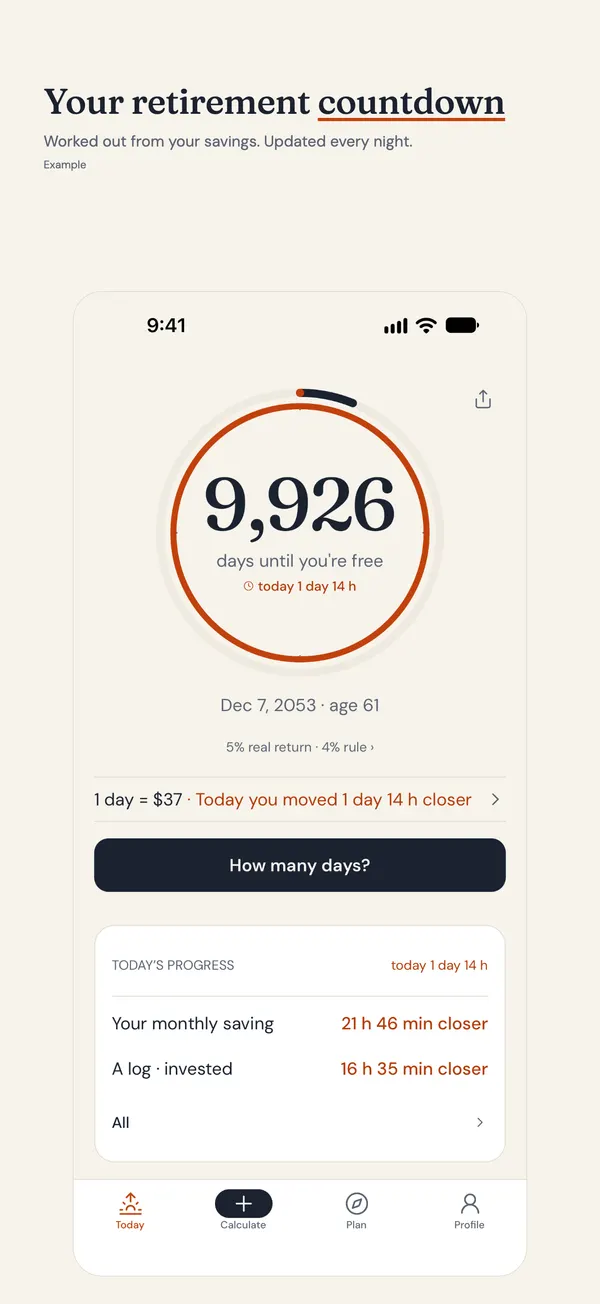
Four questions — your age, savings, monthly investing and monthly spending — and Untilfree gives you a date. Then try What if changes and watch the date move.
- What if: invest more, spend less, add a one-off (3 a day free after the first 3 days; unlimited with Plus)
- Your own growth rate and your own safety margin (Plus)
- Cautious, likely and optimistic dates
App Store · Free · Ads, optional Plus · No account · No bank link
Untilfree gives estimates in today’s money (after inflation). Taxes and state pensions are not included. This page is general information, not investment advice.
Published · by Srofia