 Untilfree
What Must You Invest to Get $1,000 a Month in Dividends?
The answer depends almost entirely on the dividend yield: the share of your portfolio paid out as cash each year. At a typical yield of 3.5%, it is roughly $343,000.
The short answer
$1,000 a month is $12,000 a year. To collect that in dividends, you need a portfolio big enough that its yearly payout reaches $12,000. A lower yield needs a bigger pile; a higher yield needs a smaller one.
- At a 2% yield, about $600,000.
- At a 3.5% yield, about $343,000.
- At a 5% yield, about $240,000.
These are before tax and rounded. Yields move every year, so treat them as a starting point, not a quote.
Why not just chase a 5% or 8% yield?
Because the number on the label is only half the story. A very high yield can mean the share price has fallen, or that the payout is stretched thin. If a company cuts its dividend, your $1,000 a month can become $600 overnight, and the price often drops at the same time.
A steadier, lower yield on a wide mix of businesses usually pays less today but is easier to trust for decades. Many people also accept that growth matters: a portfolio whose dividends rise over the years can beat a high flat payout in the long run.
A worked example
Marcus wants $1,000 a month to cover his rent. He has $60,000 invested and adds $800 a month. He assumes a 3.5% yield and 5% growth a year after inflation, with dividends reinvested until he needs them. His portfolio could reach about $343,000 in about 15 years.
If he assumes only 2%, the target becomes $600,000 and the date moves out to about 23 years. If he assumes 5%, it comes in at about 11 years, but he knows that yield is less certain. The honest answer is a range.
What $1,000 a month actually pays for
For many people $1,000 is not "retirement". It is a slice of life: a rent share, groceries, or all the small bills. That is a useful way to think about it. You do not have to wait for dividends to cover everything. You can aim at the bills in order, starting with a lean budget, and celebrate each one that your investments now pay for good.
Things to check before you rely on it
- Tax. Dividends are taxed differently depending on your country and the type of account. The amount that lands in your bank can be lower than the amount paid out.
- Reinvesting vs spending. While you are still working, reinvesting dividends makes the pot grow faster. Taking them as cash only makes sense when you need them.
- Diversification. One company paying you $1,000 a month is a risk. A spread of many is calmer.
- Total return. Dividends are part of what your investments earn, not extra on top. See living off dividends for how the two ideas fit together.
See what your own pile pays
If you already have money invested, you may be closer than you think. Dividend income by portfolio size shows what $100,000 to $2 million could pay each month. In Untilfree you can enter your own yield and see which of your bills your savings already cover. The phone bill gets "paid for, forever" long before the rent does.
Questions people ask
How much do I need to invest to make $1,000 a month?
At a 3.5% yield, roughly $343,000. At 2% it is about $600,000 and at 5% about $240,000. The lower the yield you can count on, the more you need. These figures are before tax and only a rough guide.
How much stock do I need to make $1,000 a month in dividends?
It depends on the payout, not on the number of shares. The yearly goal and the yield together set the size of the pot. A wide mix of companies at a steady yield is usually easier to rely on.
How can I get $1,000 a month in dividends faster?
Many people invest more each month, keep costs low and reinvest dividends while they wait. Raising your savings rate usually moves the date more than hunting for a higher yield, which adds risk.
Are dividends taxed?
Usually yes, but rules differ by country, account type and how long you held the investment. Untilfree does not calculate tax, so local rules or a qualified adviser are the place to check.
Is a 5% dividend yield safe?
Not automatically. A high yield can signal a falling price or a stretched payout, and dividends can be cut. A moderate, diversified yield tends to be steadier, though nothing is guaranteed.
Watch your bills get paid for, forever
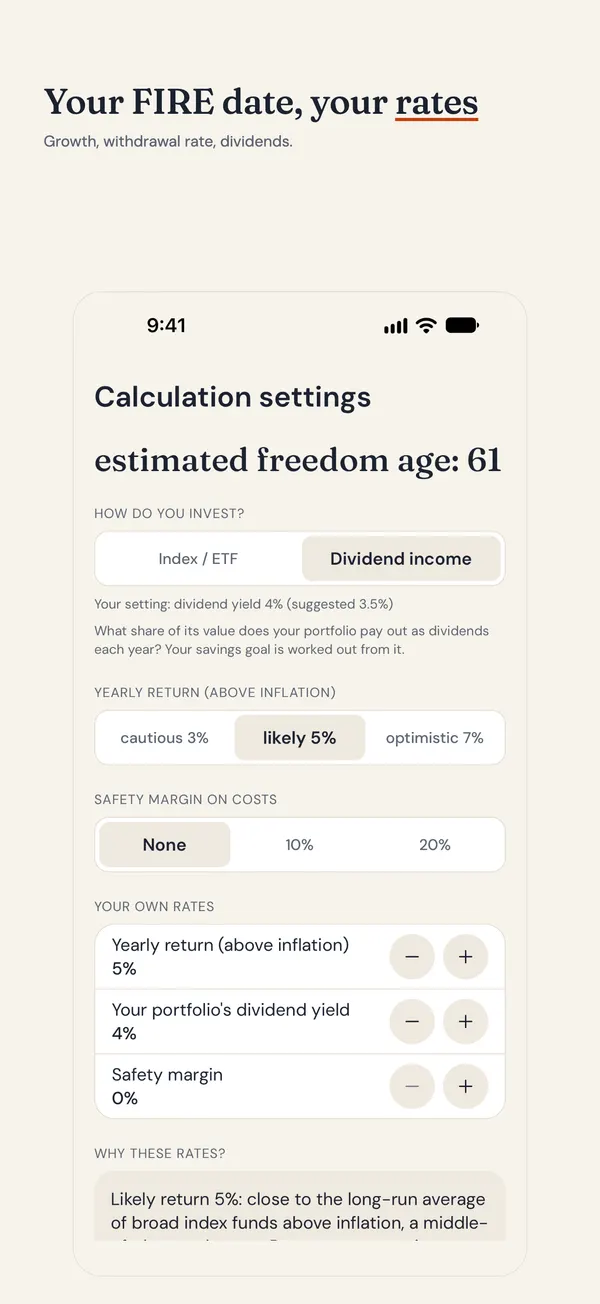
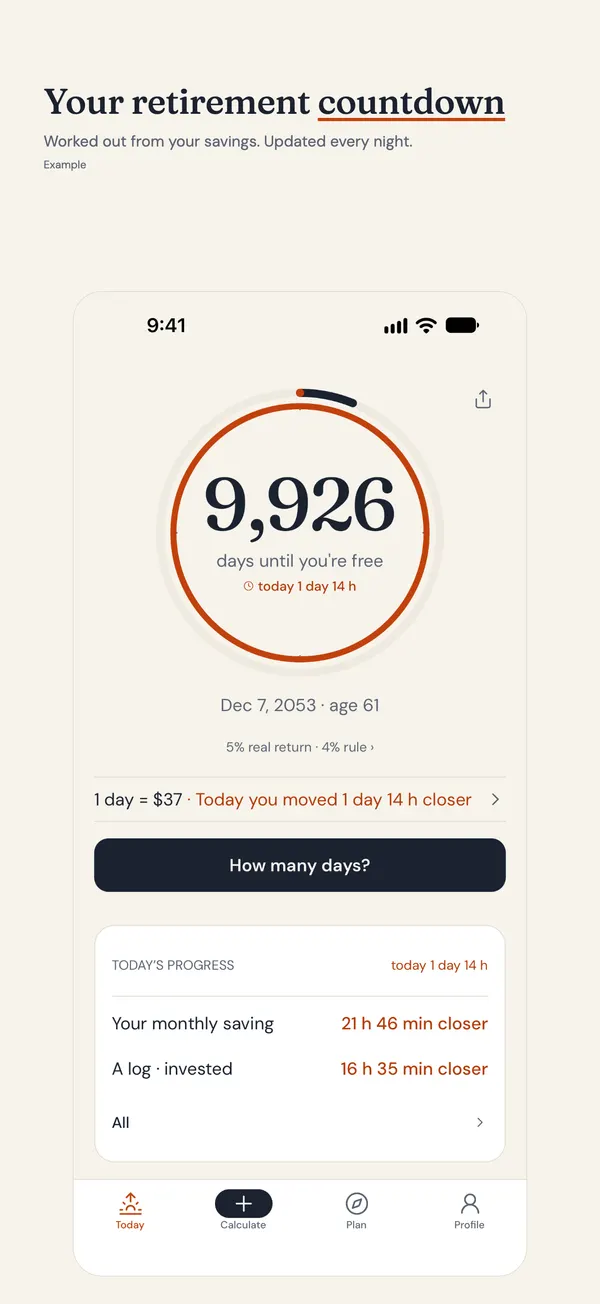
Choose dividend income mode, set your own yield, and add your bills. Untilfree shows which ones your savings already cover, and counts down to the day they cover everything.
- Dividend yield set by you, default 3.5%
- Bills covered one by one: phone bill, paid for, forever
- No bank link; your numbers stay on your phone
App Store · Free · Ads, optional Plus · No account · No bank link
Untilfree gives estimates in today’s money (after inflation). Taxes and state pensions are not included. This page is general information, not investment advice.
Published · by Srofia